
Jauch’s Selection: Rethinking Earl Grey
My connection with Philippe Scholl is not a classic business story, but something that in Switzerland is often more enduring than any networking event: a shared context from earlier years.
I know Philippe from my time in sports in Schaffhausen. Back then, he worked for a local luxury watch brand – that world of precision, ritual, and attention to detail suited him long before tea was ever a topic. Later, he moved to Biel; the contact remained loose, more a line in the background than a regular exchange.
Precision, raw material, and style
Before entering the tea business, Philippe spent many years at Nespresso. Somewhere along that path, there was one of those spontaneous evenings you don’t plan but that stay with you: I suddenly found myself behind the bar as a kind of bartender for the team, mixing rum espresso martinis – not out of concept, but because sometimes it’s enough when someone nudges the moment in the right direction.
From today’s perspective, it feels only natural that Philippe eventually ended up in tea: here too, it is about precision, raw material, and style – and about the ability to balance something so it does not taste like show, but like a distinctive signature.
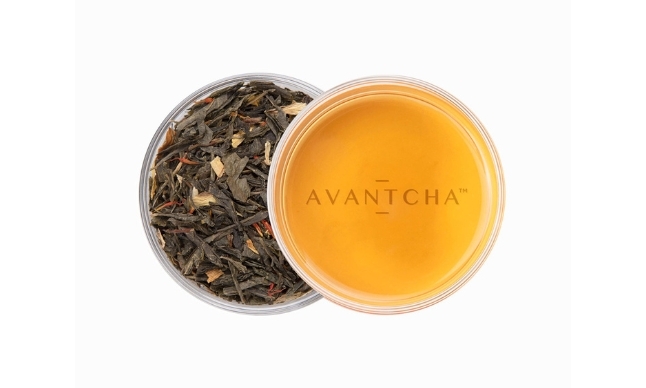
Green Earl Grey by Avantcha. (Image: Avantcha)
My discovery in Dubai
When we met again after some time, tea had suddenly become both topic and mission. At some point, Philippe said something along the lines of: «You have to meet Markus.» He meant Markus Zbinden, the Swiss founder who has been building Avantcha out of Dubai for more than a decade – and who approaches tea with a seriousness more commonly found in the wine world: origin, craftsmanship, ritual, precision.
finews has previously told the story of Zbinden and Avantcha; those who want to go deeper will find the context there.
The problem with perfume
This background also explains why I always take a particularly close look at Avantcha. Tea is a category where much is sold through aroma – and that is precisely why I keep stumbling over something that is obvious to many but often tiring to me: Earl Grey.
I like very few Earl Grey teas. Not because I don’t appreciate citrus – quite the opposite – but because bergamot in many blends has a quality that reminds me of perfume: it dominates, it wants to please, it fills the room before the leaf even has a chance to develop its own voice. In the cup, there is a lot of «aroma» and little «tea», and after two or three sips I notice that my mind has already checked out.
Rare balance
All the more surprising, then, when a tea is called Green Earl Grey – and still wins me over. What I appreciate about Avantcha’s Green Earl Grey, beyond the idea of reinterpreting Earl Grey, is the simple fact that the blend achieves a balance that is rare: the bergamot is present, but it does not take over; it adds an accent without painting over the tea.
The green tea remains visible, with its freshness, its clear line, and that fine astringency that makes good green teas not bitter, but precise. The citrus note thus feels more like zest than a cloud of fragrance – and suddenly you get exactly what is often missing in Earl Grey: a tea that works through coherence.
Earl Grey – next level
This shows up quite simply in my daily routine: I drink a cup of Green Earl Grey almost every day, usually as my second tea. I let it steep for three minutes, because that is where the balance begins for me: enough structure from the green tea leaf comes through. When a product finds its way into your routine, that is a very honest judgment of quality.
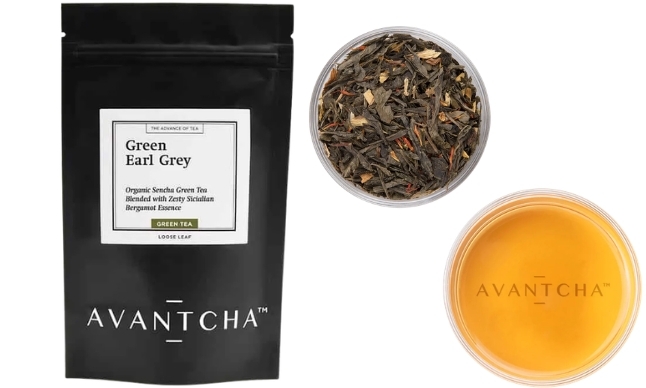
A fresh and clean finish. (Image: Avantcha)
The strange thing about enjoyment is that it rarely follows our own categories. When I told my girlfriend – a declared Earl Grey enthusiast – that I hardly like any Earl Greys, she laughed and pointed out that «Earl Grey» is already in the name of Green Earl Grey. That brief moment described the issue better than any theory: the mind reads labels, judges in advance, and creates categories, while the palate often understands much faster whether something works or not. Enjoyment does not come from labels.
Without the sweet aromatic cloud
In the cup, the tea presents itself as a bright, cleanly structured blend. On the nose, citrus is present yet controlled; on the palate, the tea is clear, light, and still structured because the green tea base does not disappear. The finish remains fresh and tidy, without the sweet aromatic cloud that many flavored teas leave behind.
In one sentence: an Earl Grey for people who find Earl Grey too loud – and who prefer drinking tea over fragrance.
Enjoyment tool: how to brew it to preserve the balance
When a blend depends on balance, much can be ruined during brewing – usually not through dosage, but through water that is too hot and steeping times that are too long. If you want to experience the tea as intended, a precise and calm preparation works best.
… Water: soft to medium, as hard water quickly dulls green tea and emphasizes bitterness.
… Temperature: 75–80°C. The hotter the water, the more it shifts toward bitterness – and the faster bergamot feels perfumed again.
… Dosage: 2–2.5 g per 200 ml as a starting point.
… Steeping time: 3 minutes as a reliable sweet spot if you are looking for balance between structure and elegance; if you prefer it lighter, start at 2 minutes and adjust.
… Second infusion: worthwhile if you prefer it even clearer; the second infusion often feels more «refined,» as the aromatics integrate even better into the structure.
Jauch’s conclusion
Avantcha’s Green Earl Grey is one of those quiet discoveries for me. It shows that a classic profile does not need to become louder to feel modern. It reminds me how often we confuse taste with terminology – until a single cup proves the opposite.
Those who love Earl Grey will find a lighter, more refined interpretation here; those who usually avoid it may, perhaps for the first time, feel that bergamot can be not perfume, but a precisely placed accent.
Green Earl Grey is available from Avantcha (19 francs per 100 grams)
«Jauch’s Selection»: The biweekly finews column in which Peter Jauch precisely classifies champagne and other fine beverages and supplements them with practical service advice.