
Jauch's Selection: A Champagne Newcomer You Should Try
At Wine Paris, a wide range of new Champagnes were on display. In many cases, established houses and growers presented new cuvées or vintages for tasting.
Maison Pompadour takes a slightly different approach, as the house has officially only existed since last year. It debuted with a vintage Champagne from 2017, a Blanc de Blancs sourced from the largest Clos in Champagne – the one located behind the Pommery estate.
A well-known cellar master
And yes, the talented cellar master is the same as at Pommery: Clément Pierlot. During a visit in the 2025 harvest, I already had the chance to taste the 2017 – a truly delicious Champagne with everything one expects from a Blanc de Blancs. Today, however, the focus is on the foundation of the Pompadour range: the Brut Réserve.
In Champagne, «Brut Réserve» is not a glamorous category, but rather a ruthlessly honest one. It is here that a house proves whether it truly masters its craft. Not with the prestige cuvée released once a year, but with the bottle that finds its place on many tables: for apéritifs, seafood, cheese, meat, vegetables – and, of course, good conversation.
A confident cuvée
Maison Pompadour is an intriguing newcomer. With its 2017 vintage (97 points from James Suckling), the bar was set high from the outset. This makes the Brut Réserve all the more interesting: it shows how solid the foundation really is.
What «Réserve» actually means here – and why that is not trivial
«Réserve» is not a legally defined term. That is precisely why it is interesting: it forces a closer look.
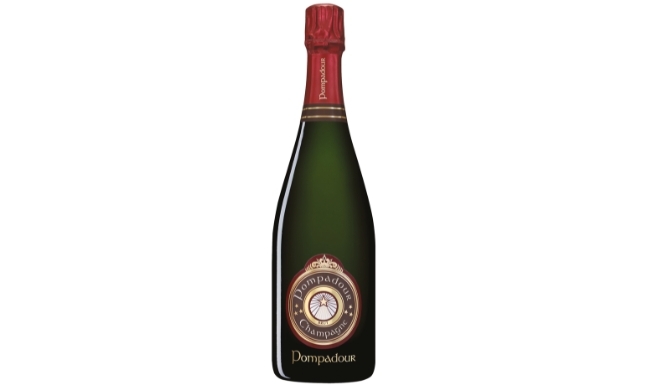
A charming match with burgers & fries or Gruyère: Pompadour Brut Réserve. (Image: Courtesy)
Deliberately set accents
At Maison Pompadour, the idea of «reserve» is not just marketing, but is expressed through a specific detail: the liqueur d’expédition is conceived as a cuvée in its own right – composed of reserve wines from Clos Pompadour (a product of the Pommery house), including a collection of vintage magnums (2004–2013) and a perpetual reserve from Clos Pompadour.
This is a remarkable approach, as it places a particular focus on the wine after disgorgement. Not «rounding off at any price», but a deliberately chosen, matured component that brings depth and complexity – binding the cuvée together rather than masking it.
The discovery
The Réserve Pompadour is described as a classic blend, produced from Champagne’s three major grape varieties: Pinot Noir, Meunier & Chardonnay – with the aim of balancing tradition and individuality. For the Brut Réserve, grapes from outside the Clos are also used.
On the nose and palate, the profile is strikingly clear: ripe yellow fruit, a floral note (rose), along with vanilla, a delicate hint of toast, and a touch of white pepper spice. The palate opens fresh, supported by minerality, yet with a fine texture, opulent fruit, and a long, harmonious finish.
The Munich moment: Moules Japonais as a litmus test
We served this Champagne at a dinner at Usagi in Munich – paired with Moules Japonais. And it was precisely there that the Brut Réserve showed what it is capable of: mussels bring salt and texture, and depending on preparation also umami, spice, and sometimes even heat. The pairing worked because the Réserve Pompadour relies not only on its bubbles, but on structure: minerality as backbone, ripe fruit as cushion, spice as a bridge.
I appreciate these moments at the table when a Champagne both accompanies the dish and sparks curiosity about the wine itself. In Munich, with the Moules Japonais, that was exactly the case: the wine remained precise, the finish salty and mineral – and suddenly everyone wanted to know where and when they could buy it. The guests were unanimously enthusiastic, and the restaurateur also praised this Champagne as a true hit.
Enjoyment tool: How to serve it to show what it can really do
Temperature
… Apéritif: 8–9 °C – fresh, clear, precise
… At the table: let it rise toward 10–11 °C. This is where texture and spice become more expressive.
Glass
… Ideal: tulip glass
… For food: white wine glass
… The flute looks elegant, but it restricts structure. PLEASE never use it for high-quality sparkling wine.
Timing: Brut Réserve often builds in the glass:
… First glass = fruit + freshness
… Second glass = texture + toast + spice
… Small trick: pour a little first, wait two minutes, then top up.
Food: three reliable anchors (plus the Munich pairing)
1) Moules Japonais
Salt/sea + umami require minerality and tension. This is exactly where this cuvée feels at home.
2) Hard cheese (Comté, aged Gruyère)
Salt + nuttiness meets toast/spice – this almost always works when the Champagne has depth.
3) Fried dishes (tempura, croquettes)
Champagne acts as the more precise lemon wedge: acidity and bubbles cleanse, while texture remains.
4) Burger & fries
The ripe freshness harmonizes beautifully with salt, potatoes, and beef.
Jauch’s conclusion
Maison Pompadour may be young, but it already brings considerable experience to the market. The Brut Réserve from Pompadour is a Champagne that fits perfectly into an ordinary week. It is balanced, textural, and driven by a «reserve» concept that genuinely reads as a signature.
Service note: The Champagne is now also available in the Coop online shop under the “rarities” section. Price: a very approachable 57 francs.
«Jauch’s Selection»: The biweekly finews column in which Peter Jauch precisely classifies champagne and other fine beverages and supplements them with practical service advice.