
Fine Dining: Star Wars in Austria
Competition among gastronomic guides is not a new phenomenon. In Switzerland, the dynamic between the local Gault-Millau franchise, overseen by the notorious gourmet pope Urs Heller at Ringier, and the Guide Michelin is well known.
What is new in Austria is that this rivalry is being played out coram publico—in full view of the public.
Amador and Weissgerber earn three stars
The backdrop to this development is the Guide Michelin’s recent full-scale return to Austria. Yesterday, it published its ratings. Juan Amador, of the Vienna-based restaurant «Amador,» had already been awarded three stars in previous years, operating in a quasi-extraterritorial context. Newly joining the top ranks is Vienna’s «Steirereck im Stadtpark» by Heinz Reitbauer with its chef Michael Bauböck, now also boasting three stars.
Austria’s culinary constellation is further enriched with 13 new two-star restaurants and 53 new one-star establishments. This achievement was celebrated by Gwendal Poullennec, the International Director of the Guide Michelin.
Newcomer faces harsh critique
The Michelin star rain was preceded by controversy with the magazine «Falstaff.» Publisher Wolfgang Rosam has built a culinary media empire from Austria, with coverage across the German-speaking world, including restaurant reviews.
In a newsletter personally sent by Rosam last week, he delivered a scathing critique of the newcomer: «As early as the mid-2000s, the world’s most important restaurant guide, owned by tire manufacturer Michelin, recognized Austria’s gastronomy. However, the French withdrew after a short stint, deeming it ‹unprofitable.›»
2.1 million euros over three years?
Rosam takes issue with the fact that the new Austrian edition of the Guide Michelin, published exclusively online, is «generously subsidized by the tourism sector.» He claims the «French billion-euro company» will receive a total of 2.1 million euros over three years.
Rosam wields sharp criticism, accusing the Guide Michelin of freeloading: Falstaff had compiled its «reviews, which presumably provided a solid information base for the French inspectors, at its own risk and expense.»
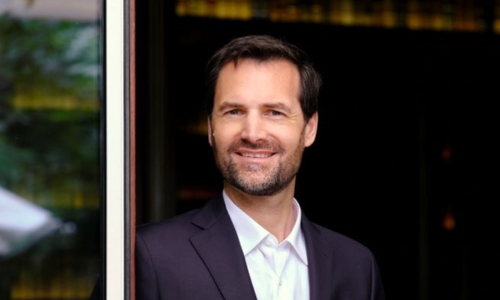
Subsidized? Guide Michelin Director Poullennec. (Image: Courtesy)
«To be continued.»
Rosam adds: «Politically, there will be no objections, as State Secretary for Tourism Susanne Kraus-Winkler (ÖVP) ensured parliamentary approval from all parties for this unique approach.» He concludes ominously: «To be continued.» The suspense lingers.
What does the Guide Michelin say on the matter? A spokesperson told finews.com: «We don’t consider ourselves competitors to Falstaff.» Since 1927, the Guide Michelin has awarded its stars to excellent cuisine.
Guide Michelin: «No competition»
The Guide Michelin dismisses Rosam’s freeloading accusation: «In all our selections worldwide, including Austria, we focus on the quality of our work and the decades of experience brought by our international, professionally employed inspectors. We always form our own assessments on-site to identify the best venues for guests.»
Regarding public subsidies, the spokesperson remained tight-lipped: «There are some selections worldwide that Michelin publishes in collaboration with public organizations. We do not comment on which ones or any contractual details.»
Signs of détente?
Is Austria experiencing a culinary star war? It seems the situation may not be as heated as it initially appeared:
Once the Michelin stars finally rained down on Austria, Falstaff reported on it without alluding to the controversy.