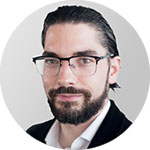
Hakan Sesle: «For UHNWI Clients, Personal Advice Remains the Key»
The availability of market data has exploded over the past ten years. Has the quality of investment advice kept pace?
In principle, every additional data point helps sharpen forecasts. But more doesn't automatically mean better. It's rather more nuanced than that.
How would you sum up the evolution of the past decade?
The supply of market data has grown enormously. We receive more research from all our partner banks, and many independent providers have nearly reached the level of banks themselves. The effort required to aggregate and interpret all of this has increased substantially — and at the same time, it has become harder to charge for that effort. On balance, though, we view the development positively.
What do clients actually gain from this data tsunami?
The benefits are indirect but significant. The key condition is that their adviser knows how to curate the information and, equally important, understands exactly what the client needs. Our job as an asset manager is to process the data, translate it into relevant insights, and provide context.
«Especially in periods of stress or disruption, you need experience from past events to arrive at a well-grounded view.»
So clients don't benefit from the data directly?
They certainly have easier access to data themselves these days and are generally better informed than they used to be.
Does that change the role of the relationship manager?
It evolves constantly. Clients want context, background, and connections — not just raw data. That curation function is becoming more complex, but also more interesting for the relationship manager.
Do experience and gut instinct still play a role?
I'm convinced they remain critically important. Especially in periods of stress or disruption, you need experience from past events to arrive at a well-grounded view.
Contextual and sentiment analyses are already available as data products. Does that make the relationship manager redundant as an information intermediary?
Money is deeply personal. I believe clients will continue to expect, above all, transparency in decision-making, reliability, and clear reasoning they can follow. That speaks to a hybrid model — human and data-driven — for the long term.
«Permanent validation is essential, given that disinformation campaigns and bots have made their way into financial market research.»
How exactly does Marcuard Heritage develop its market views?
We draw on information from multiple sources as our decision-making foundation, particularly for specific focus themes. Through our analysts and a proprietary scoring model, we produce a qualitative assessment that is approved through a clearly defined process in an investment committee. There is always room for individual client preferences. We also track the research quality of each source over time to understand who excels in which segments.
To what extent is Marcuard Heritage already using AI tools?
We have naturally integrated relevant intelligence into our analyses — currently focused on data processing, translation, and event monitoring. Permanent validation is essential, given that disinformation campaigns and bots have made their way into financial market research.
Will software eventually become the better adviser?
The trajectory is impossible to predict and I wouldn't rule anything out. But one thing is clear: no asset manager can differentiate itself from competitors through data volumes and software-based analysis alone. That will become a commodity. What will matter for long-term business success is the interpretation of data — especially in difficult markets — and the ability to match that intelligence to individual client needs.
«No asset manager can differentiate itself from competitors through data volumes and software-based analysis alone.»
What is Marcuard Heritage's formula for success in that regard?
There is no single formula, but we have building blocks that continue to underpin our performance. Through our many partner banks, we have access to an exceptionally broad data universe and know who is strong where. We also maintain close client relationships, which means we understand what clients are looking for and what matters to them. That knowledge acts as a personalized filter in our data interpretation and enables truly tailored solutions.
So you don't believe robo-advisers will gain lasting traction in wealth management?
I haven't seen anything yet that would make that scenario realistic. Purely data- and rules-based funds already exist, and I do think certain analyst roles face pressure. But for ultra-high-net-worth individuals, personal guidance and advice remain the cornerstone of the client relationship.
Hakan Sesle has served as chief investment solution officer at Marcuard Heritage since 2019 and became a partner in 2025. He previously held roles in investment solutions at EFG, BSI, and Coutts.