
ETFs and Active Strategies: Where the Next Growth Surge Is Expected
At the Swiss stock exchange SIX, the total number of listed ETFs stood at 2,099 at the end of December 2025. This further expanded the symbolic threshold of 2'000, which had been surpassed for the first time in the second quarter of 2025.
ETFs are booming. Hans-Jörg Morath, Head of ETF Sales in Asset Management at Zürcher Kantonalbank (ZKB), is convinced that the point of saturation is still far away. On the contrary, he believes the market is at the beginning of a structural growth phase. «This will continue,» he said in an interview with finews.
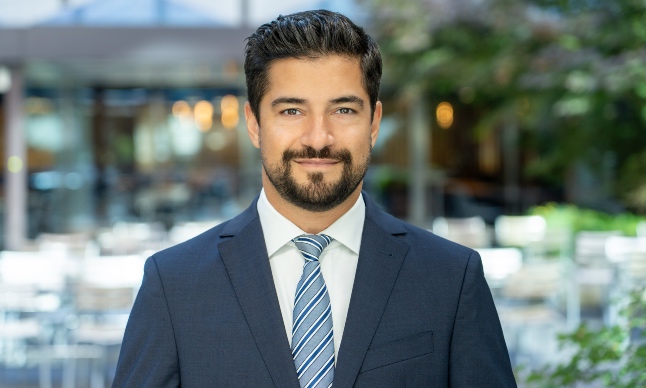
Hans-Jörg Morath, Head of ETF Sales in Asset Management at Zürcher Kantonalbank (ZKB). (Image: zVg)
ETF market: From Professional Tool to Retail Standard
While Germany has been regarded as Europe’s largest ETF market for around ten years, the success story in Switzerland began much later, specifically on September 15, 2020.
For a long time, ETFs were primarily seen as instruments for portfolio managers to efficiently implement strategic and tactical asset allocation. Today, however, the industry is experiencing its strongest growth in private savings plans. «More and more private savers are joining, using the capital markets for their retirement provision,» Morath said.
The Key Difference Compared with Germany
One of the main drivers is improved financial literacy. Digital channels, social media and self-education platforms make it easier for retail investors to independently explore portfolio construction, diversification and the compound interest effect.
At the same time, Switzerland differs structurally from Germany. Investors who fully utilise the tax-privileged pillar 3a potential typically invest in free ETF savings plans only afterwards.
Market Continues to Grow Despite Price Pressure
As the market expands, competition is intensifying. Neo-brokers offer ETF savings plans at very low transaction costs, in some cases effectively free apart from product costs. Established banks are also expanding their offerings accordingly.
In the passive segment, displacement competition has now emerged in Switzerland as well. Margin erosion and the shift towards passive strategies have been shaping asset management for some time. Morath nevertheless emphasises that the overall market continues to grow. It is not a zero-sum game, but rather a combination of competitive pressure and additional inflows of new money.
The European ETF market recorded inflows of around 400 billion dollar last year. After the first months of the current year, volumes already stand at roughly 100 billion dollar. Morath expects annual net inflows in Europe to reach between 500 and 600 billion euro, provided the current momentum continues.
Active ETFs: A Launch Wave Facing its Test
Alongside traditional index products, active ETFs are gaining importance. Across Europe, more than 50 new active products were launched in 2024 and 2025. In the equities segment covering the United States and Europe alone, there are now around 20 products with a three-year track record.
The decisive phase is now beginning: building performance histories, establishing trust and clearly explaining to investors how a strategy differs from its benchmark. «The client must understand what they are investing in,» Morath emphasises. Education is particularly important for more complex approaches that are not weighted by market capitalisation.
In his view, the combination of passive core building blocks and active satellite strategies remains sensible. In a core-satellite approach, cost-efficient index products can be combined with tactical active strategies depending on risk profile, investment horizon and thematic preferences.
Sustainability: From Trend to Normality
According to Morath, sustainable investment strategies are not a temporary trend. Although the political debate has cooled somewhat, institutional investors continue to adhere to their ESG requirements.
At Swisscanto, more than half of last year’s new inflows went into sustainable strategies. «That is a strong signal,» Morath said. Sustainability is no longer a side note, but a multi-billion niche with structural growth.
Themes and Trends: Precious Metals, Small caps and Emerging markets
Alongside the structural growth of ETFs, Morath identifies several tactical focal points.
Precious metals: Gold and silver have recently recorded strong performance, accompanied by profit-taking. The asset class remains attractive, also through ETF solutions, such as the physically backed gold ETF that Swisscanto launched twenty years ago as the first of its kind in Europe.
Small and mid caps: After the strong performance of large caps, smaller companies could increasingly move back into focus.
Emerging markets: Equities from emerging markets are gaining renewed attention.
Thematic investments: Following the AI boom, new long-term trends are coming into view, including Healthy Longevity. ZKB launched several active funds focused on sustainable investment themes in 2024.
According to Morath, thematic strategies require patience. Long-term megatrends are subject to short-term fluctuations – what matters is an appropriate investment horizon.