Middle East: The dynamics behind the strong growth in Private Banking
How does Pictet anticipate competition evolving in Middle East private banking—especially with other global and regional banks scaling up their presence?
Competition in the Middle East has naturally intensified, as both international and local banks have clearly recognized the importance and long-term potential of the region. Many players are currently scaling up their presence.
That said, Pictet's positioning remains truly unique. We are a privately owned partnership, still family-led, with two of our seven managing partners coming from the founding families of the firm established over 220 years ago. They have their names on the door, and they are directly accountable to our clients, which is extremely rare in the financial industry now.
«We have been pioneers in the alternatives space with Pictet Alternative Advisors.»
Our structure gives us a decisive advantage: we operate without conflicts of interest and without the short-term pressures associated with listed institutions. Indeed, we are not required to deliver quarterly results to support a share price, which allows us to take a genuinely long-term approach. It seems to work since the latest figures show we have just reached total assets amounting to 950 billion US dollars. Remember that Pictet has never made a single acquisition in its history, as we remain very conservative and believe that M&A creates significant risks and does not benefit our clients.
In an era of accelerating digital transformation and AI adoption in regional banking, what investments is Pictet making in technology and digital client experience for Middle East clients?
Pictet is making significant investments in technology and the digital client experience—for clients in the Middle East and globally. The bank’s approach to innovation is deeply rooted in Pictet’s tradition of entrepreneurship and long-term thinking, but it is also driven by a commitment to technological advancement.
Pictet is mainly investing in technology to enhance efficiency and drive long-term growth, particularly by ensuring that digital tools complement and augment human interaction rather than replace it. The bank recognizes that, especially in regions like the Middle East where personal relationships are highly valued, the human touch remains essential even as digitalization accelerates.
One of the most prominent examples is the launch of Pictet’s Quest AI strategy in asset management, which leverages artificial intelligence to generate excess returns for clients. This initiative has been very well received and demonstrates how technology can enhance financial advice and investment outcomes.
Does Pictet expect a shift in client demand towards alternative investments, private markets, real-asset allocations, or private equity/co-investment structures, which seem to be growing in the region?
We have been pioneers in the alternatives space with Pictet Alternative Advisors (PAA), which is the alternative investment arm of the Pictet Group and which today manages 50 billion US dollars in assets. Our stability as an investment partner has afforded us privileged access to key players in the alternatives industry.
«Performance is essential but not sufficient.»
In five years, we have doubled our staff, to now around 150 people. For the past 35 years, we have allocated capital to PE Fund of Funds and established our own direct private equity, real estate, and private debt teams. Private market investments are a strategic asset class in most of our clients' portfolios in the region.
How does Pictet plan to integrate ESG/sustainability, risk management (cybersecurity, compliance), and regulatory developments in its private banking offering for Middle East clients?
Pictet places a strong emphasis on robust risk management, including advanced cybersecurity measures to protect sensitive data and financial assets, while ensuring full compliance with both global and local regulations. At the same time, we are dedicated to integrating ESG principles into our private banking offering for interested Middle East clients. As a signatory of the Net Zero Asset Managers (NZAM) initiative, Pictet is committed to addressing the financial risks and opportunities associated with climate change. Pictet has also adopted Science Based Targets initiative (SBTi)-validated goals, aligning its efforts with the global objective of limiting temperature rise to 1.5°C by the end of the century.
Given the evolving regulatory and onshore booking environment in the UAE and GCC, how does Pictet structure offerings to accommodate clients seeking local onshore solutions vs. traditional offshore/private banking models?
Pictet’s private banking model in the Middle East is primarily focused on offshore solutions, which remain a core strength of our offering. However, we recognize the growing demand for local onshore solutions in the UAE and GCC. While we believe local players are well-positioned to provide expertise in domestic investments, we are actively exploring ways to enhance our onshore capabilities to better serve clients with specific local needs while maintaining our global perspective.
For clients with diversified regional/global exposure (real estate, business investments, multiple jurisdictions), how does Pictet approach multi-jurisdictional wealth structuring and cross-border advisory—and what’s their view on demand for these services in 2026?
At Pictet, our wealth planners specialize in supporting clients with assets and interests across multiple jurisdictions. We take a comprehensive and personalized approach to help clients manage and safeguard their wealth. This includes presenting tailored options such as trusts, foundations, and holding companies in jurisdictions like Switzerland, the UAE, and Jersey. Our team ensures compliance with global regulations like CRS and FATCA while focusing on addressing the needs of our clients.
«In our role as wealth managers, our first responsibility is to assess and understand the objectives and needs of our clients.»
We anticipate growing demand for these services by 2026, driven by increasing wealth among high-net-worth individuals in the Middle East, the Great Wealth Transfer, rising interest in global investment opportunities, geopolitical changes, and the need for coordinated international strategies. As a family-owned bank, Pictet is well-positioned to guide families through these complexities with forward-thinking and customized solutions.
What does Pictet see as the most important value-add for clients in the region beyond pure portfolio returns (e.g., estate planning, legacy/family-office services, succession planning, access to exclusive private-market deals)?
Performance is essential but not sufficient; families also seek continuity, education for the next generation, succession planning, and access to illiquid opportunities vetted with institutional discipline.
Our family advisory team advises families on their governance. Family governance is a structured way for families to make decisions together and stay united across generations. It provides clarity on roles, values, and direction, thus helping families navigate change with confidence.
We design practical governance and succession frameworks tailored to MENA family structures—such as holding company boards, family offices, and investment committees—to professionalize oversight while preserving family values and legacy. Our approach includes developing family charters, codifying values, and engaging the next generation to ensure smooth transitions. We also provide cross-border wealth and estate planning to address evolving tax regimes and international assets, as well as structured philanthropy to translate family legacy and social responsibility into measurable impact.
With global interest rates, asset-class valuations, inflation, and currency fluctuations remaining uncertain, how does Pictet plan to manage risk and deliver returns to Middle East clients in 2026?
We have revised our strategic asset allocations to reflect the evolving global environment, with particular attention to the position of the US relative to its main creditors. This analysis has underscored the importance of currency allocation as a key factor in client portfolios.
As a result, the proportion of US dollar assets will be significantly higher for dollar-based clients compared to those whose base currency is the euro, Swiss franc, or pound sterling.
Furthermore, our expectation for a long-term decline in the US dollar should benefit US equities, as many US multinationals generate a substantial share of their revenues in non-US dollar currencies.
What is Pictet’s view on liquidity and exit flexibility for private-market and alternative investments offered to clients in the region—especially given regional appetite for co-investments, secondaries, or continuation vehicles?
As investors, in this context, we focus on premium assets from top-tier GPs where a longer holding period offers genuine value. Recent media commentary has highlighted the growing use of continuation vehicles in private equity. While once viewed skeptically due to concerns about conflicts of interest and recycling underperforming assets, CVs are now recognized as strategic tools for retaining exposure to high-quality assets with further value creation potential. They allow General Partners (GPs) to extend ownership of top-performing companies and give Limited Partners (LPs) the choice to roll over or exit, which is especially valuable when traditional exits like IPOs and M&A are limited. The main concern with CVs is valuation, as both seller and buyer are often affiliated with the same GP. To address this, the industry employs independent valuations, third-party price discovery, LP Advisory Committee oversight, and clear options for LPs to ensure fairness and transparency.
How does Pictet balance conservative wealth-preservation strategies vs. growth-oriented allocations for clients in a region where wealth accumulation and diversification are accelerating?
In our role as wealth managers, our first responsibility is to assess and understand the objectives and needs of our clients. For any client, appreciating the implications of adopting either a conservative or a growth-oriented investment profile is crucial. To this end, we dedicate significant time to discussing investment goals, using our long-term expected returns for asset classes and historical examples of major market drawdowns. Thus, our clients’ strategic asset allocation should reflect their investment objectives while also generating a level of risk that is acceptable to them.
Given increasing regulatory, compliance, and cybersecurity demands in banking for the GCC, how does Pictet ensure robustness and compliance while preserving confidentiality and client experience?
Cybersecurity and compliance are strategic priorities for us. Swiss financial institutions operate under some of the strictest global standards. For clients, the benefit is simple: secure infrastructure, strong confidentiality, and rigorous controls that ensure their wealth is protected from operational and regulatory risks.
What’s the expected timeline and criteria for onboarding new clients from the Middle East in 2026 (e.g., minimum investable assets, documentation, and domicile considerations)?
We adhere strictly to international regulations and local cross-border requirements. Timelines depend on the client’s structure, documentation completeness, and the jurisdictions involved.
Our priority is efficient and timely onboarding while maintaining uncompromising standards of due diligence and regulatory compliance.
We are committed to delivering on schedule and meeting our clients’ specific needs.
How will Pictet adapt its relationship-management model and advisory service for «next-generation» clients—younger entrepreneurs or family-office scions—whose preferences may differ from traditional ultra-high-net-worth individuals?
We are the bank of families. Our approach for next-generation clients is an evolution: embedding generational empathy, education, and co-creation into our existing long-term model, rather than on a separate track. This approach aligns with how MENA family offices are strengthening governance, prioritizing succession, and preparing the next generation to lead while maintaining the core values and continuity.
Guided by the Pictet fortress model, we bring a long-term, prudently governed approach to wealth stewardship. For us, adapting to the needs of next-generation clients is more than a business imperative—it is a source of inspiration.
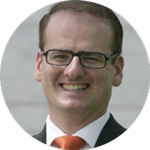
Yves Bruggisser is Head of Pictet Wealth Management for Middle East & Africa at Banque Pictet.
He joined Pictet in 1999 and has built a long-standing career across research, investment advisory, and private banking. After starting as a buy-side analyst covering US consumer stocks, he transitioned to Pictet Wealth Management’s Middle East team as an investment specialist, becoming a senior private banker in 2008 and team head in 2014.
He was appointed Equity Partner in 2020 and joined the PWM Executive Board in 2022, taking responsibility for the Middle East and Africa region, with client coverage from Geneva, Zurich, Dubai, and London. Prior to Pictet, he worked as a Senior Auditor at EY. Yves holds a Master’s degree in Finance from HEC Geneva.
- << Back
- Page 2 of 2