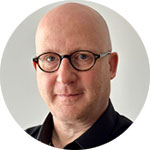
Gregor Hirt: «I Knew – This Was Our Opportunity in Switzerland»
Mr. Hirt, markets remain jittery. Most recently, tariffs imposed by Trump triggered renewed turbulence. Do you expect volatility to persist through the end of the year?
We’re only at the start of June, and the developments we’ve seen in the first five months of the year would normally unfold over several years. These are profound structural changes.
The trade dispute remains unresolved. Are you concerned?
The U.S. administration is treating tariffs with near-religious zeal. So far, we’ve avoided the worst-case scenarios—but I believe many are still too optimistic.
What makes you skeptical?
U.S. markets have rebounded and are performing better than before the so-called «Liberation Day.» That’s difficult to rationalize, given that the dispute is far from over. Negotiations are dragging on. In this configuration, the U.S. stands to lose the most. That gives us pause.
So the risks remain?
Yes. Despite favorable conditions in Europe—moderate inflation and lower energy prices—we are urging caution. Higher tariffs come with massive administrative burdens, something Brexit made painfully clear.
«U.S. Treasuries and the dollar used to be considered safe investments. That’s changed under Trump.»
How significant are geopolitical crises in your view?
They are a major source of uncertainty. In addition to the war in Ukraine, tensions in Kashmir remain high. But what concerns me even more is something else.
What exactly?
I call it the «Pandora’s box of the U.S. safe haven.» U.S. Treasuries and the dollar used to be considered safe investments. That’s changed under Trump. He is deliberately weakening the dollar, disregarding ballooning national debt, and promising further tax giveaways. This has undermined the confidence of many long-term investors, particularly in Asia. We are now seeing some of them reduce their dollar holdings.
At the same time, Europe seems to be gaining momentum. Is this a sustainable trend?
The fiscal pivot—meaning the willingness to invest in infrastructure and defense—is underappreciated. It’s essential for structural growth, which the entire region can benefit from. But we also need labor market reforms and deregulation—similar to what Germany implemented under Chancellor Schröder’s «Agenda 2010.»
«In Europe, perhaps only London can match with Switzerland.»
You’ve expanded your business in Switzerland. Was the Credit Suisse crisis a factor?
Switzerland has always been a strategic market for us—but access was difficult due to the dominance of large banks. When the Credit Suisse crisis escalated, it became clear to me: this was our opportunity. Switzerland needs additional global players with local expertise. That’s why we expanded our presence and complemented our established fixed-income offering with multi-asset strategies.
Was it the right move?
Absolutely. The market response has validated our strategy.
Has the Credit Suisse crisis caused lasting damage to the Swiss financial center?
I continue to view Switzerland as a highly resilient market. Its openness, central location, and ability to attract top talent—particularly through institutions like ETH Zurich—are major strengths. These qualities, along with an attractive tax and regulatory environment, need to be actively maintained.
How would you assess the financial center’s capacity for innovation?
In Europe, perhaps only London can match it. What Switzerland achieves within such a compact geography is remarkable—and that’s precisely why we’re committed to long-term growth here.
Gregor M.A. Hirt is Global Chief Investment Officer (CIO) Multi Asset and Managing Director at Allianz Global Investors.