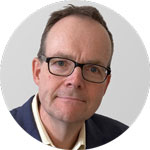
Pius Fisch: «In Our Job, You Need Principles»
Thirty years ago, you, Mr. Pius Fisch, along with your brother Kurt, founded the financial boutique Fisch Asset Management. How did that come about?
Pius Fisch: Our father already owned a clothing and shoe store, so we grew up understanding what it’s like to earn money through customers. My brother Kurt, who at the time was managing what was likely Switzerland’s first convertible bond fund at SKA, came to me with the idea of creating a financial boutique that offers fund solutions. We always got along well as children, so I agreed. Our core idea was to focus exclusively on convertible bonds and institutional clients—nothing else. This market is a narrow niche, and convertibles are a specialized instrument, so most clients require advice.
How did things progress from there?
Fisch: At the beginning, we didn’t have a single client, but then asset managers started coming to us. By the late 1990s, there were only four of us. Then we decided to grow and launched two funds for pension funds, which still exist today. We first had to explain that convertibles don't fall under the category of alternative investments, but instead belong to the asset classes of equities or bonds. We started with 40 million francs in each fund, which was a huge success at the time, thanks in part to our intensive marketing. Around 2000, we expanded into Germany. After the dot-com bubble burst, we benefited from our conservative approach, as unlike the competition, we didn’t have any «high-flyer» convertibles in our funds.
What is your secret to success?
Fisch: You need to approach your daily work seriously and with joy, enjoy working with people, and be honest with yourself while staying open to learning. It’s essential to understand that the interests of individuals often don’t fully align with those of the company. In our field, having principles is crucial. These principles must be well-known and consistently upheld, with no exceptions. The principles themselves should be regularly reviewed and, if necessary, revised. This way, employees know exactly where they stand. I’ve always hired strong individuals, who know more and are more capable than I am in their areas of expertise. That can lead to tough discussions, but it ultimately helps the company grow.
«I’ve always hired strong individuals, who know more and are more capable than I am in their areas of expertise.»
Torsten von Bartenwerffer: Transparency is key for us as a small company. Our 70 employees know exactly what’s going well and what’s not. We’ve designed our policies and structures to ensure equality, though putting this into practice can sometimes be more challenging.
Fisch: For example, at our company, all board and executive committee minutes are shared openly because we want employees to feel like entrepreneurs. Employee participation is another aspect of this. While my brother and I still hold the majority stake in the company, our share is gradually decreasing. We also maintain an open culture of discussion. When my brother and I worked at large corporations, we were poor networkers because we always said things directly to everyone’s face.
The convertible bond market has had a rough two years. During the pandemic, the market was booming, with many borrowers securing capital cheaply through this instrument. Since then, valuations have corrected, new issuances almost dried up, and with rising interest rates, traditional bonds have become more attractive. How do you handle such cycles?
Von Bartenwerffer: Indeed, it’s been a tough period. Like all bonds, convertibles were affected by the rise in interest rates. Additionally, many companies opted for other forms of financing during the pandemic due to fiscal and monetary incentives, resulting in very few new convertibles in 2022 and 2023. The rule is simple: the more issuances, the better for the market. As an active manager, we thrive when the universe grows and evolves. The convertible market has always been cyclical, and after the record year of 2020, a correction, or mean reversion, was likely. From today’s perspective, there’s a lot to suggest that convertibles will regain appeal.
«The more issuances, the better for the market. As an active manager, we thrive when the universe grows and evolves.»
Fisch: The period of zero interest rates was challenging for convertibles because they lost a crucial element. Yes, it’s a cyclical business. I vividly remember 2007, which was a terrible year for convertibles. One of our clients doubled their allocation in 2008, believing in the instrument—and they were absolutely right.
Why has the volume of your flagship Convertible Global Defensive Fund shrunk so significantly?
Von Bartenwerffer: Poor market performance led to significant outflows, especially from pension funds, affecting all providers. Our fund also suffered because it had a low exposure to tech stocks, resulting in underperformance. However, we no longer have «weak hands» invested, so the current investor base is more stable. The sector has gone through a shakeout—some competitors have shut down, and others have marginalized convertibles within their asset mix. While we do offer more than just convertible bonds, they remain a central focus for us. This shakeout allowed us to recruit specialists who weren’t previously available on the market. When the market picks up again, it will be hard to bypass us, and we’re confident that the bottom has been reached.
«It will be hard to bypass us»
Why should clients return at all?
Von Bartenwerffer: Because, in the long term, convertibles offer an excellent risk-return profile. Due to market inefficiencies, they structurally provide a strong risk-adjusted return. You’re raising an important point, though. If convertibles appear unattractive for two or three years and there’s a generational shift among institutional investors, our challenge is to show clients why this instrument makes sense in a portfolio context—even if trendier asset classes like Private Debt may seem more appealing right now.
You also had to downsize. In 2020, you had 91 employees; today, there are only 66.
Von Bartenwerffer: After expanding in 2020, we had to increase efficiency and adjust our capacity due to the poor market conditions, even beyond portfolio management. This wasn’t something we desired, but it was in the best interest of the company and the employees who remained.
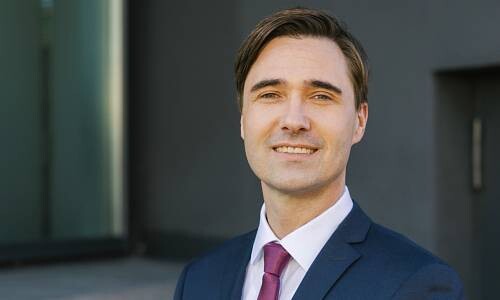
CEO Torsten of Bartenwerffer (Image: Fisch Asset Management)
Most agile financial boutiques eventually end up being acquired by larger players. Do you ever regret not selling the company at its peak in 2019/2020?
Fisch: We did consider that question, but we enjoy being entrepreneurs. What would we have done afterward? In the current challenging market environment, we are being tested. However, we are well-positioned and wish to remain independent. The key is that money is a crucial tool for an entrepreneur but not the ultimate goal. We never aimed to simply make as much money as quickly as possible. Money is the result of entrepreneurial activity, not the goal itself.
«We have two founders who are deeply committed entrepreneurs and provide us with the balance sheet and resources even in tough times.»
Von Bartenwerffer: When we hire people and they ask why they should join us, I always give the same answer. First, we have excellent employees, not only in portfolio management but also in risk management, for example. Second, we have top-notch infrastructure, such as the BlackRock portfolio management system. And we have two founders who are deeply committed entrepreneurs and provide us with the balance sheet and resources even in tough times. This stability is fundamentally different from being backed by a private equity firm where you have to report financials every two weeks.
Today, you offer not only convertible bond funds but also high-yield corporate bonds and emerging market bonds. Doesn’t this represent a departure from the Pure Player image you’ve maintained for so long?
Fisch: We chose to diversify in 2006/2007. This makes sense because it allows us to leverage our existing expertise. The price behavior of these instruments and the analytical skills required are not identical but quite similar. However, we still do not engage in equities and exclude instruments denominated in local currencies.
Von Bartenwerffer: From an analytical perspective, convertibles consist of bonds and equities, with added convexity, meaning convertibles typically benefit more from rising stock prices than they lose from falling prices. The transition to corporate bonds is fluid. However, there are many areas where we receive inquiries but choose not to engage, such as private debt and the regulatory-driven contingent convertibles issued by banks.
«Our work involves craftsmanship, and there is less glamour compared to the equities space»
What does it take to be a successful portfolio manager?
Fisch: Back in 1994, I witnessed the dollar’s sharp decline up close. This put a lot of players under pressure. They went back in too early, driven by the fear of missing out on a recovery, which was greater than their fear of losing more. A portfolio manager under stress is a poor portfolio manager because they can’t capitalize on opportunities effectively.
Von Bartenwerffer: Our work involves craftsmanship, and there is less glamour compared to the equities space, where there are daily new and exciting stories. It’s not possible for performance to be good every year, but over time, the performance must exceed the benchmark. This is achievable in the fixed-income space – quite different from equities, where it is almost impossible to consistently outperform the market – more than half of active managers fail to do so.
Before founding Fisch Asset Management, Pius Fisch worked as a lawyer at Zurich Insurance. Until 2018, he was also Chairman of the Board, a member of the Executive Board, and Head of Legal – today, he focuses on his role as Chairman of the Board.
The company founders, Pius and Kurt Fisch, have also made preparations for a generational transition in recent months and made other important appointments. For instance, Pius’s son Alexander Fisch has joined the Board of Directors, which has also been strengthened by the addition of Stefan Mächler. Mächler will remain CIO at Swiss Life Asset Managers until the end of March 2025.
Torsten von Bartenwerffer has been CEO of Fisch Asset Management since November 1, 2023, after previously working with the company for over two years. His prior career includes positions at the German Feri Group, Aquila Capital Hamburg, the former Credit Suisse subsidiary Clariden Leu, and UBS.
Contributor: Dominik Buholzer