
Asset Management in Switzerland: Rich in Assets, Poor in Talent?
With assets under management of 3.45 trillion Swiss francs in 2024, Switzerland is the third-largest asset management market in Europe. The current Swiss Asset Management Study shows that both institutional investors and private wealth clients pool substantial volumes of capital in the country. For international asset managers, Switzerland therefore remains a highly attractive distribution and asset-pooling market.
According to Christian Haas, co-founder of Eleway, a consulting firm specialising in asset management for board & executive search as well as organisational development, this is only one side of the picture. «The question is not whether Switzerland is relevant, but where along the value chain this relevance actually arises,» he says.
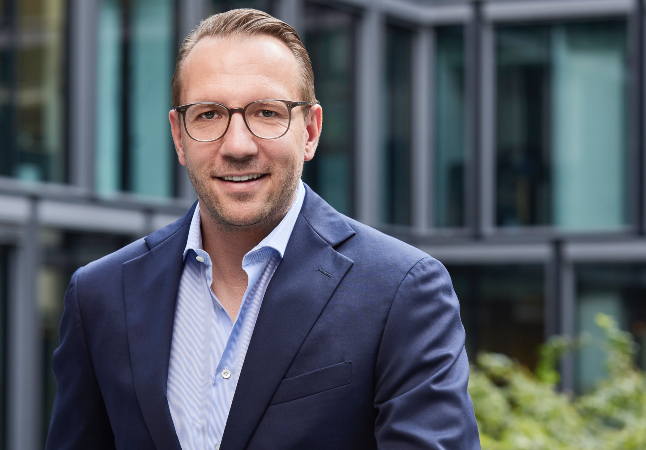
Christian Haas. (Image: zVg)
London Overtakes Switzerland
And here, Haas's conclusion is not favorable: «Especially in demanding and scale-intensive asset classes such as private markets or alternative investments, the presence of investment talent is limited,» he says.
London remains Europe’s most important talent market. This is due to the broad talent pool in specialized strategies, the high mobility of investment professionals, and the proximity to global capital markets, data providers and institutional capital flows.«Hinzu kommt eine historisch gewachsene Leistungskultur mit ausgeprägter KPI- und Ergebnisorientierung», sagt er. By contrast, according to the expert, Switzerland lacks scale, internationalisation and density, particularly where specialisation and platform effects are decisive.
Private Markets: Investment Teams Barely Present
According to Haas, private markets are a good example. Private markets are often cited as a segment in which Switzerland could play a role as a production location. However, origination, deal sourcing and platform building continue to be primarily managed from London or New York. For asset classes such as real estate, infrastructure or direct lending, physical market access is key – and this is only rarely located in Zurich, Geneva or Zug, Haas says.
Switzerland’s restraint could have negative consequences. Other jurisdictions are acting far more aggressively. The United Arab Emirates and Saudi Arabia are currently attracting international portfolio managers and investment teams at a rapid pace. «There, asset management is part of an industrial policy agenda that links economic diversification, state-backed capital programmes, platform building and talent acquisition,» Haas says.
A comparable vision is hardly visible in Switzerland so far. Haas concludes: «Whether the financial centre will gain importance in the future also as a hub for investment talent and investment production is not a question of starting conditions, but of the will to shape it. The prerequisites are there. What matters is whether Switzerland positions itself clearly – or continues to leave this role to others.»