BMW, Mercedes and VW: German Icons Reinvent Themselves
By Jérôme Marchon
At the IAA Mobility, the spotlight traditionally belongs to the local champions: BMW, Mercedes-Benz and Volkswagen take center stage in Munich after Chinese manufacturers had recently captured much of the attention.
Still, they cannot be ignored: 14 brands from China are present – nearly half of all exhibitors.
Counteroffensive on Home Turf
On their own ground, the three German giants are using the show to present new, fully electric models. Their goal is clear: keep the Chinese competition at bay while also conquering the U.S. market. This comes despite heavy burdens from the trade war unleashed by Donald Trump.
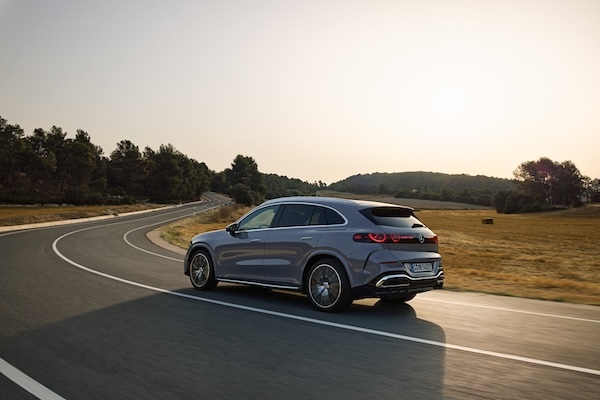
First public showing: the all-electric Mercedes GLC. (Image: zVg)
A Battered but Resilient Industry
The past years have been tough: restructurings, job cuts, strategic realignments. Chinese newcomers put the industry under pressure – technologically as well as in infrastructure. The shock was exacerbated by U.S. tariffs of initially 27,5 percent, later lowered to 15 percent but not yet widely implemented.
Nonetheless, the German manufacturers have invested hundreds of billions in electric drivetrains, software and artificial intelligence. The result is a new generation of vehicles: longer ranges, shorter charging times, comprehensive connectivity. «We are going on the offensive,» declared Volkswagen CEO Oliver Blume. His counterpart at Mercedes-Benz, Ola Källenius, even speaks of a «wind of optimism» for an industry that «has never invested more and is looking forward with determination.»
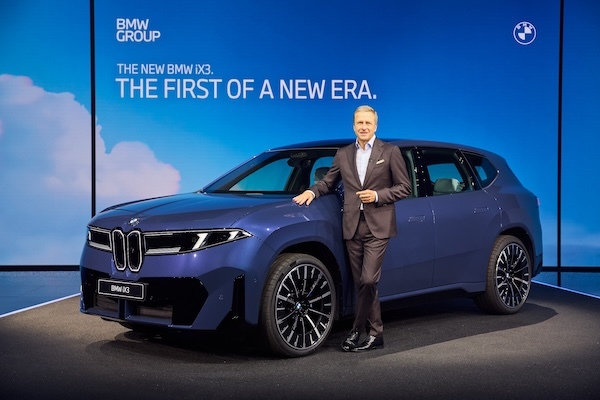
BMW CEO Oliver Blume celebrates the world premiere of the Neue Klasse: the first iX3 model. (Image: zVg)
French Elegance as Counterpoint
Renault is also making an appearance in Munich: alongside its successful electric models R5, Megane and Scenic, the company is unveiling the sixth generation of its bestseller Clio.
A perennial favorite for 35 years, it now appears more sustainable – with over 33 percent recycled materials, a 160 hp full-hybrid drive and modern connectivity.
China Remains Aggressive
The battle won’t be easy: Chinese brands have doubled their European market share within a year, from 2,9 to 5,9 percent. «BYD is here to stay,» emphasized Stella Li, vice president of the world’s largest seller of electrified vehicles. In Munich, the Chinese are showing not only the Seal 6 DM-i Touring plug-in hybrid wagon, built in Hungary, but also their 1-megawatt fast-charging technology, enabling 400 kilometers of range in just five minutes.
Other brands are also making their mark: Leapmotor – Stellantis’ partner – aims to win over younger customers with a compact-class model. Xpeng plans to expand to 60 countries by the end of 2025, entering Switzerland this month and opening a development center in Munich to build the next generation of its AI-driven P7 sedan.
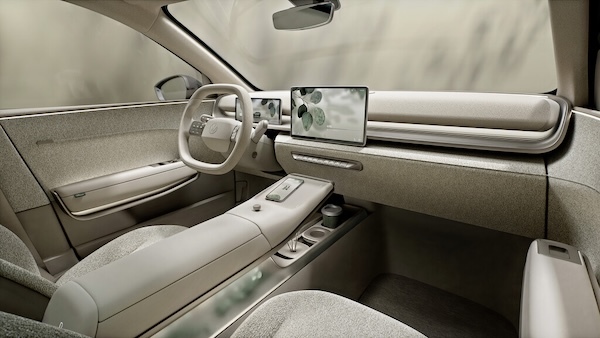
Futuristic from Wolfsburg: interior design of the iD.Cross concept car. (Image: zVg)
Germany’s Heavyweights Strike Back
BMW unveils the Neue Klasse iX3 SUV: up to 800 kilometers of range, with 369 kilometers added in ten minutes of charging – inspired by 1960s design. Mercedes focuses on the electric GLC with a 713-kilometer range and an illuminated Maybach-style grille.
Volkswagen, meanwhile, will bring the iD.Polo to market in 2026 for under 25'000 euro, including a sporty GTI version – a return to the original “Volkswagen” principle. Also on display are the Cupra Raval, the new T-Roc and concepts such as the iD.Cross or Skoda’s Epiq.
Between Washington and Shanghai
Volkswagen finds itself in a quandary: losses in China and billions in costs due to U.S. tariffs weigh heavily, especially on Audi and Porsche. The latter was recently removed from Germany’s leading DAX index – after a stock slump of more than 45 percent since its IPO. Causes include weak Taycan sales in China, high costs for fully in-house EV development, and Oliver Blume’s dual role as CEO of both Porsche and Volkswagen.
Volkswagen already employs more than 5'000 people at its plant in Tennessee. Further investments are planned – «if the U.S. sends a signal,» as Blume notes, without giving details.
Jérôme Marchon is a freelance automotive journalist from western Switzerland. He is editor-in-chief of Contact!, the mobility magazine of Journal de l’Immobilier/Le Temps, and a regular contributor to various other media outlets.