
Summer Greetings From The Dutch Showcase Town
Written by Saurabh Sharma, Fund Manager of the Regnan Sustainable Water and Waste Fund at Regnan
Amsterdam is renowned for its extensive network of canals and waterways, making it one of the most water-rich cities in Europe. 165 canals run through the city centre, divided into around 90 islands and connected by over 1,200 bridges. Until the 20th century, the canals also served as sewers. Residential buildings, craft businesses and factories disposed of their waste here - with corresponding consequences for the water quality. Things are different today. Every evening, the locks are closed and a pumping station in Zeeburg pumps around 600'000 cubic metres of fresh water from the IJsselmeer into the canals. The entire canal water is exchanged within approximately three days.
Water and waste management is no longer a fashionable hype, but a fundamental infrastructural pillar of modern societies. This became particularly clear during my visit to Aquatech Amsterdam 2025, one of the world's leading trade fairs for water technology. This is where companies, engineers, scientists and start-ups come together to discuss current challenges and technological solutions
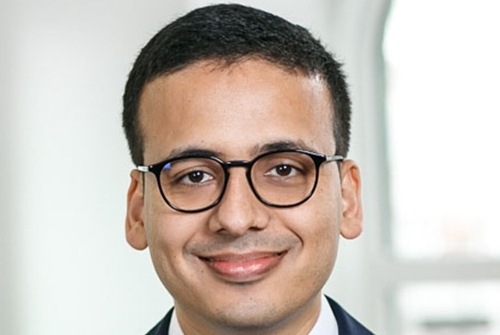
Saurabh Sharma from Regnan. (Image: provided)
Technologies for the future of water
The economical use of fresh water is currently a key issue. The pressure to use water more efficiently is increasing, particularly in industry. Modern membrane bioreactors and ultrafiltration systems make it possible to reuse even heavily contaminated process water - an approach that not only conserves resources, but is also becoming increasingly relevant in economic terms. Companies that invest in circular water solutions today not only ensure security of supply, but also improve their environmental footprint.
At the same time, there is a growing awareness of hazardous substances that are difficult to break down. PFAS, so-called «perpetual chemicals», pose a particular challenge. They enter the water via industrial processes, packaging or textiles and accumulate over years. New technologies such as activated carbon filters, ion exchange or nanofiltration are designed to help remove these substances. The fact that such processes are now also available for smaller systems shows the technological progress made in the industry.
In addition to technology, digital control is also playing an increasingly important role. Sensors measure water quality, pressure and flow rate in real time. The data is analysed centrally in order to detect leaks at an early stage, for example, or to plan maintenance efficiently. This turns traditional infrastructure into a learning, predictive system. Smart meters make water consumption more transparent, help to save money and enable faster communication in the event of a crisis. At the same time, digital platforms are being created that not only suppliers but also cities and municipalities can use to better manage the condition of their water infrastructure.
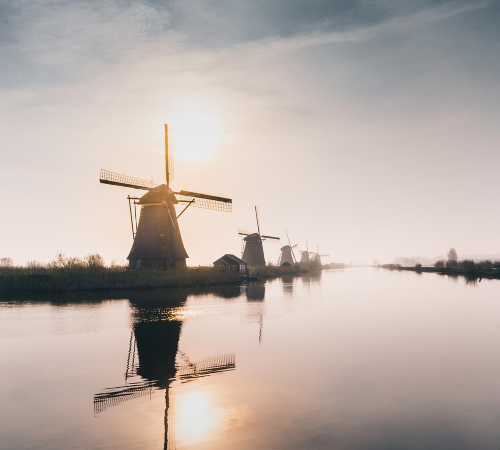
Windmill near Amsterdam. (Image: Pixabay)
Modern water management is no longer necessarily tied to centralised networks. It is becoming more flexible, more resilient and adapts to local conditions. As a result, the demand for mobile and modular water treatment systems that offer utilities and industrial companies flexibility, efficiency and lower investment costs is increasing. These compact, containerised solutions can be deployed quickly in various scenarios, from emergency measures to temporary capacity expansion.
Minor impact of tariffs and Trump
The companies in our strategy operate locally and are not directly affected by tariffs. Water and waste management are bipartisan issues, and companies expect spending on related infrastructure to continue to rise. The sector continues to offer attractive investment opportunities in both the short and long term. For example, Watts Water Technologies, a global leader in water solutions for residential, commercial, and industrial markets, has generated annualised shareholder returns of approximately 18 percent over the last ten years outperforming the broader market thanks to consistent earnings growth, expanding margins, and robust free cash flow.
The company’s focus on innovative plumbing, HVAC, water quality, and drainage products has enabled it to deliver these superior returns. An example from the solid waste market is Republic Services, which achieved an average annual return of around 23 percent over the last ten years - significantly more than the S&P 500. The company benefits from its position as a fully integrated waste management company in the USA and offers stable margins, rising dividends, and continuous organic and acquisition-driven growth.
Despite some short-term challenges, the fundamental drivers of the industry remain strong, underpinned by the need for critical infrastructure, technological advances and an increasing focus on sustainability. Both water and waste management companies are well positioned to capitalise on these trends and many are implementing strategies to increase operational efficiency and improve margins.