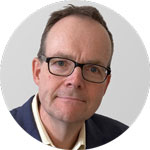
Otto Reventlow: «We simply let the trees grow»
No, forests are definitely not an asset class that you often find in the investment portfolios of Swiss pension funds. One reason for this is probably the fact that most of the forest land in this country is owned by public entities (municipalities, cantons, corporations). The rest is privately owned, often divided into small plots, and frequently only changes hands when inherited.
The situation is different in Denmark. There, pension funds and insurance companies began investing in forests back in the late 1980s – initially in their own country, but then internationally due to the naturally rather limited market.
In the Forestry Business for Decades
Otto Reventlow, founder and still CEO of the International Woodland Company (with the not entirely unique abbreviation IWC), was and remains a driving force behind this development. He graduated in forestry from the University of Copenhagen in 1988 and then carried out forest assessments for the Danish Forest Association, the trade association for the Danish forestry industry.
«When tradable forest land became scarce in Denmark and an insurance company wanted to invest, we recommended that it do so in Ireland, where the European Community was promoting reforestation projects at the time,» Reventlow recalls in an interview with finews.com. This marked the birth of IWC, which advises institutional investors on forest investments and also offers corresponding funds, such as the BNP Paribas Future Forest Fund.
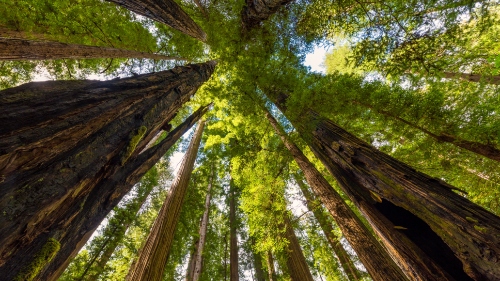
(Image: IWC)
In 2023, BNP Paribas Asset Management acquired a majority stake in the company. With Axa Investment Managers acquisition by BNP Paribas Group in July 2025, IWC is likely to increase its profile in this country.
Sustainability has been a top priority at IWC since the beginning. In 1987, the Brundtland Report was published, which outlined a model for modern sustainable development for the first time and also inspired the founder.
Mr Reventlow, you are in Switzerland to attend the Pension Symposium, among other things. Have you already been able to convince Swiss pension funds of the merits of forests as an asset class?
Many are interested and are taking a closer look at the market, but are not yet ready to allocate a quota to it. That takes time, but it will come. We operate in a niche market, so there is a need to educate investors.
What is your strongest selling point: the return or the promise of sustainability?
Regular returns are key for pension funds. But sustainability is also important to our clients. This is a long-term investment with a low correlation to other asset classes. It offers protection against unexpected inflation and also has a favourable risk/return profile.
«This is a long-term investment with a low correlation to other asset classes, offering protection against unexpected inflation and a favourable risk/return profile.»
How do you generate income? Do you sell wood?
Yes, the main source of income is timber harvesting, and the most important customer is the construction industry. Anything that cannot be used in this way is sold as pulpwood or compressed wood. The last thing we want to do is burn wood, because that releases CO2. The yield is normally between 2.5 and 3 per cent per year. Added to this is the increase in value of the forest areas. We have this estimated by certified independent third parties.
How do you ensure sustainability in your management?
We commission local companies to carry out forest maintenance and timber harvesting. We have been certified by the Forest Stewardship Council (FSC), the strictest standard in our field, since the beginning. We ourselves, as well as external experts, continuously check, including through on-site inspections, whether our managers comply with the guidelines. We also enter into contractual commitments, for example by creating biodiversity corridors and establishing wetlands. This also has a positive impact on the managed areas. It reduces the potential damage caused by fires, storms and beetle infestations, thereby increasing the resilience of the ecosystem – which will become even more important in view of climate change.
«Wir legen Biodiversitätskorridore an und richten Feuchtflächen ein – und erhöhen damit die Resilienz.»
How do you respond to climate change in your management practices?
Alongside soil quality and the type of management, climate is one of the most important factors for tree growth and therefore also for our yields. We therefore analyse the effects of climate change on our land in detail and select tree species that are better able to cope with it for reforestation.
ESG investments are no longer as popular as they used to be for various reasons. Have you noticed this too?
No, the trend is still intact, even if there are ups and downs. Our investors have remained loyal to us, we have not had any outflows so far and can withstand corrections.
The USA is by far your most important market today, followed by Australia and New Zealand. Isn't that a cluster risk?
It's true that the US is central to us not only in terms of forest area, but also for the sale of construction timber. Accordingly, our worst-case scenario is a collapse of the US real estate market, leading to a standstill in new construction activity. We actually experienced this during the global financial crisis, when it took years for the timber market to recover. But we can also weather such extreme periods: we simply let the trees grow instead of cutting them down and selling the logs cheaply. In addition, valuations have corrected much less harshly.
«Our worst-case scenario is a collapse of the US real estate market.»
Wouldn't it be better for diversification and sustainability if you had more forest in Latin America and Africa?
The US is simply the most liquid market for forest assets. And CO2 is a global problem. We can also make a big difference in terms of biodiversity in our main markets. The problem with Latin America is the high currency risk for investors who calculate in dollars or euros.
Forests are considered an alternative investment – but they are actually an ancient asset class, aren't they?
Yes, its history dates back to the Middle Ages. There are quite a few families who have owned huge areas of forest for many generations. In our long-term business, there are only a handful of direct competitors, and we know each other well. The market is correspondingly illiquid, so the investment ratio should only be in the single-digit percentage range and be considered a substitute for conventional infrastructure investments.