
Postfinance, UBS, ZKB: The Most Important Messages from the CEOs
The program of the 23rd «Vision Bank - Vision Financial Center Switzerland» forum held by «Finanz und Wirtschaft»(FuW) on the topic of «Evolution of banking models» was packed. In front of a full house at the SIX Convention Point on Thursday afternoon, the focus was on the impact of geopolitics on the financial markets, the future of the corporate client business, the importance of asset management, trends in the private markets and the banks' business models.
The highlight, however, were the presentations and discussions with the men who run three systemically important Swiss banks. FuW was able to attract the heads of Postfinance, UBS and Zürcher Kantonalbank (ZKB) to the event.
All of them commented on regulatory issues, in particular the new debate that has flared up following the Credit Suisse (CS) case on how much equity capital systemically important banks should hold in future as part of the too-big-to-fail (TBTF) concept. They also commented on other topics. finews.ch summarizes the most important messages from the CEOs (in the order of their appearance).
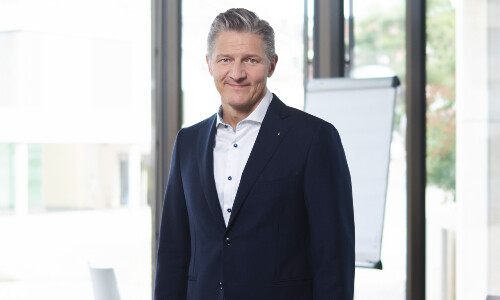
CEO of Postfinance since 2024. (Image: Postfinance)
Beat Röthlisberger
- Privatization: After the resounding failure of a corresponding bill in parliament in 2022, it is not an issue for the time being.
- Credit ban: Because Postfinance is not allowed to grant loans and the investment opportunities on the market for Swiss franc bonds and loans are limited, it is forced to invest 25 billion Swiss francs abroad. «That makes my economic heart bleed».
- Corporate customer business: «We would be ready for SMEs, but this would require a change to the Postal Organization Act.» Röthlisberger hints that he would be prepared to forgo the mortgage business in order to address the concerns of the cantonal banks.
- Basel III final capital adequacy rules: «We have to hold less equity today than in the past.»
- Postfinance's crypto services: «One reason for our involvement was that we observed outflows of customer funds amounting to 2.5 billion francs to crypto exchanges.»
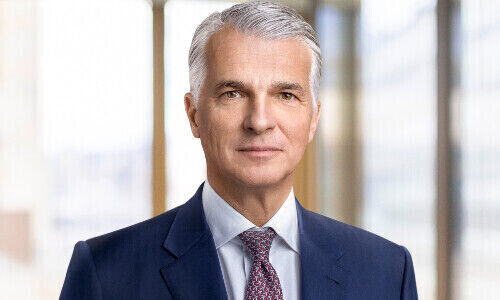
CEO of UBS (again) since 2023. (Image: UBS)
Sergio Ermotti
- CS Case: The problem here was not a lack of equity, but the wrong business model and a management and shareholders who failed to act. And without the concessions made by Finma (regulatory filter), CS would not have been able to operate as long as it did.
- Equity capital: «The quality of equity is crucial». Even higher capital requirements for UBS would mean dilution for shareholders, higher credit costs for households and companies in Switzerland and a loss of competitiveness internationally.
- Importance of shareholders: «In the event of a bank being recapitalized, shareholders are the first line of defence.» They will only buy shares again if the bank has an attractive business model.
- Debate about equity: «In Switzerland, UBS is only perceived as a threat.» According to Ermotti, this is due to the «propaganda of the Intelligenzija and the media». His concern: «We want everyone to understand the costs and benefits of stricter capital requirements.»
- Size of UBS: «In 2007, the cumulative balance sheet total of CS and UBS 3,7 trillion Swiss francs, 75 percent of which came from investment banking. Today, UBS has a balance sheet of 1.5 trillion francs, with an investment banking share of 25 percent.» Many cantonal banks have a larger balance sheet compared to the economic output of their canton than UBS has in Switzerland.
- Quality of the balance sheet: UBS currently has over CHF 200 billion in loss-absorbing capital, which is four times the loss in the financial crisis. «The risk for Swiss taxpayers is very low.»
- Public Liquidity Backstop, PLB: «Outside of Switzerland, nobody is talking about the fact that the banks should finance the PLB with a premium in advance.» According to Ermotti, the latest study by the University of Bern (on which finews.ch conducted an interview with one of the authors) has hardly any figures that are correct. And to the moderating FuW editor-in-chief: «Next question, please.»
- Possible departure of UBS: «Swissness is part of our success. UBS is an added value for Switzerland.»
- Dangers of the US business: UBS is successful in wealth management there, not in investment banking as it was before the financial crisis. «Our shareholders would punish us if we wanted to go back into investment banking.»

CEO of Zürcher Kantonalbank since 2022. (Image: ZKB)
Urs Baumann
- CS Case: It didn't die from a lack of capital, but from a lack of liquidity. «I don't understand how Finma was the only bank to grant CS a regulatory filter.»
- Equity capital: «I agree with Sergio that the quality of equity capital is.» ZKB already holds a quarter of its balance sheet in liquid assets. The consequence of higher requirements: «We would have to pass on the costs to customers and could grant fewer and fewer loans.»
- Size of UBS and the cantonal banks: ZKB's balance sheet is smaller in relation to the canton's added value than UBS's for Switzerland. «We are growing responsibly alongside the canton of Zurich.» Some cantonal banks in small cantons have a relatively high weighting. «However, if one of them were to get into difficulties, this would not be a problem for the system because it would simply be bought up by other banks.»
- Difference between UBS and ZKB: «For us as a domestic bank, a resolution based on the emergency plan would be possible.» With an internationally active bank, on the other hand, foreign interests play an important role, which makes a resolution almost impossible.
- State liquidity guarantee (PLB): There is no guarantee, and the liquidity is not provided free of charge, but in return for interest. «it is therefore not an insurance model, which is why a premium does not make sense.» In addition, ZKB has a much broader state guarantee, which it also pays off financially to the canton.
- Corporate client business: The needs of SMEs are well covered by the financial center. Larger companies that only need to refinance themselves domestically have problems. «CS was a bank that had an entrepreneurial gene and therefore had a higher appetite for risk when it came to financing.» Today, on the other hand, companies' business models have to be «bankable».
- Accusation of driving up margins: The margin on corporate loans has remained unchanged, but the price has risen. Reason: «The refinancing costs for banks have risen sharply, including for ZKB. In the last twelve months, the surcharges for us have doubled.»